Charity work and events
Appendix A: Examples of few of Past Successful Events (there are many many more):
- Seminars on corporate philanthropy and social responsibility, engaging top business houses and government advisors.
- Panel discussions on public service, featuring government ministers and leading academics.
- Events celebrating International Nurses Day, highlighting the contributions of nurses to public health.
Appendix B: Few Examples of Charity Work
(there are hundreds of work done over the years)
APPENDIX A
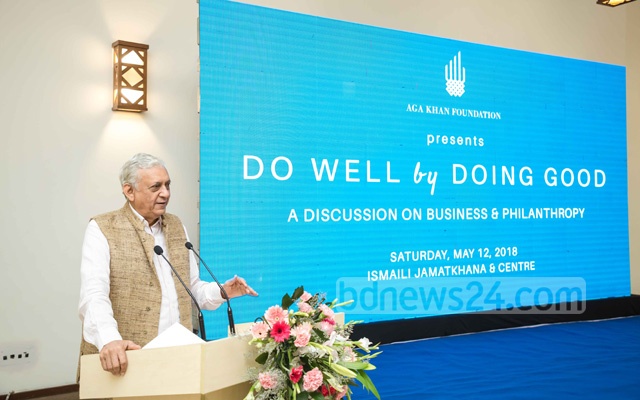
Aga Khan Foundation discusses business, philanthropy in Dhaka
The Aga Khan Foundation, an agency of the Aga Khan Development Network, brought together representatives from some of the Bangladesh’s top business houses to deliberate on how businesses can contribute “more systematically and sustainably” to social development in Bangladesh through corporate philanthropy and corporate social responsibility.
Senior Correspondent, bdnews24.com
Published : 14 May 2018, 11:10 AM
The seminar was titled “Doing Well by Doing Good: A Discussion on Business and Philanthropy”.
Dr Gowher Rizvi, the international advisor to the prime minister was present as the chief guest at the event held at the Ismaili Jamatkhana and Centre in Bashundhara.
Rizvi made a distinction between charity and philanthropy, while highlighting what makes good philanthropy.
“Philanthropy, when properly directed, when it listens to the people whom is it is serving, can be very successful,” he said.
Dilshad Dossani, chairperson of the Aga Khan Foundation (Bangladesh)’s National Committee, outlined the impetus behind the seminar.
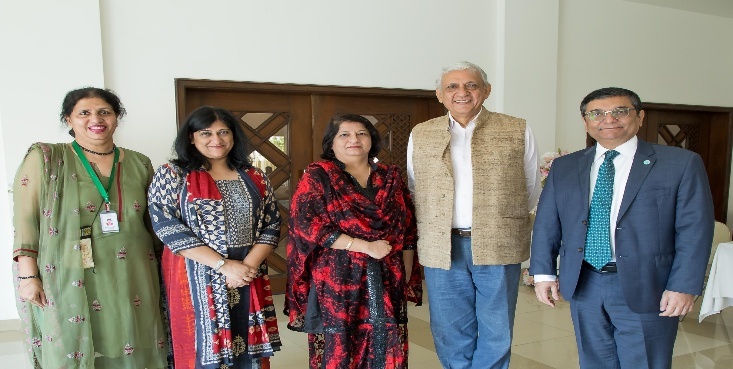
“The notion of indigenous philanthropy and the paradigm shift towards self-reliant development, we believe, has never been more relevant than it is today in the Bangladesh context.”
Apoorva Oza, chief executive officer of the Aga Khan Rural Support Program (India) spoke about corporate social responsibility, highlighting lessons from the Indian context.
There is an initial tendency among many corporates to do a lot of charity work, what we call transactional work, but the real change comes from transformational work, when we attack the roots of the problem, and that is a slow process for corporates to learn, but it is happening.”
Dr Hossain Zillur Rahman, Executive Chairman, Power and Participation Research Centre, moderated a panel discussion which featured Nihad Kabir, president of Metropolitan Chamber of Commerce and Industries, Dhaka and Syed Nasim Manzur, managing director of the Apex Footwear Ltd, among others.
Speakers: Public service key to the country’s development
The Aga Khan Foundation organizes a discussion titled ‘Public Service: Its Joy and Challenges’ in Bashundhara, Dhaka
https://www.dhakatribune.com/180922
The Aga Khan Foundation (AKF) organized a panel discussion on public service on Saturday, bringing together representatives from the government, civil society, academia and the private sector to discuss the importance of public service on the life and development of the nation, and the challenges and opportunities in the service.
The event, titled “Public Service: Its Joys and Challenges,” was held at the Ismaili Jamatkhana and Centre in Bashundhara, Dhaka.
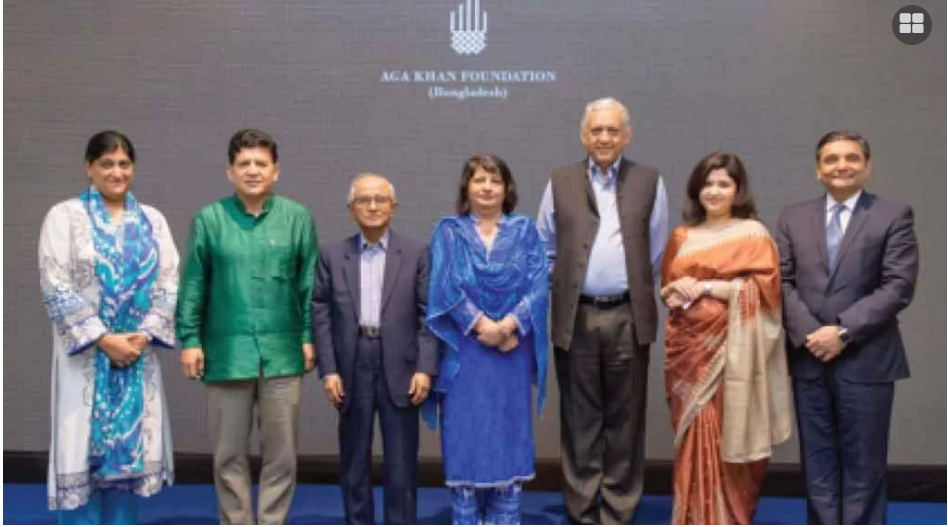
Among the speakers attending the event were Dr Gowher Rizvi, international affairs adviser to the prime minister, M Syeduzzaman, former finance minister and member of policy think tank Centre for Policy Dialogue (CPD) Board of Trustees, and Dr Hossain Zillur Rahman, economist and former adviser to caretaker government.
In his introductory remarks, Gowher Rizvi said while the phrase “public servant” or “bureaucrat” often has negative connotations associated with it, it is important to “recognize that public servants have solved some of the most fundamental problems in our lives.”
He also lauded M Syeduzzaman, who recounted his personal journey as a public servant in his keynote address.
“Everything a public servant should be, Mr Syeduzzaman has been,” Rizvi remarked.
Dilshad Dossani, chairperson of the Aga Khan Foundation (Bangladesh)’s National Committee, said the Aga Khan Foundation had an interest in the notion of public service as defined in its broadest sense of a service rendered in the public interest.
“This definition is not limited to those who work in government services, but encompasses all individuals, civil society and organizations that work for the benefit of the people of Bangladesh.” she further said.
The panel agreed that, within public service broadly defined, the concept of “public ethics” – or the notion of trying to do something better for society and to create a more humane world – is important and needs to be revived and strengthened.
The panellists also agreed that the quality of institutions that groom public servants, including the education system as a whole, play a critical role and can bring in all the available wisdom within society to help public servants understand their role and motivate them to serve for the betterment of their societies.
Thrust on quality institutions to groom public servants for better service
FE Report | July 03, 2019 12:00:00
Experts at a discussion suggested upgrading the quality of institutions that groom public servants to ensure better services for the people.
They also stressed the need for improvement of the education system to achieve the target.
The Aga Khan Foundation (AKF) organised a panel discussion titled, “Public Service: Its Joys and Challenges,” at the Ismaili Jamatkhana and Centre in the city recently, says a press release.
Former finance minister M Syeduzzaman, Prime Minister’s international affairs adviser Dr Gowher Rizvi, former adviser to the caretaker government Dr Hossain Zillur Rahman and Dilshad Dossani, chairperson of the Aga Khan Foundation (Bangladesh)’s National Committee spoke on the occasion.
The seminar brought together government representatives, civil society members, academicians and the private sector to discuss the importance of public service on the life and development of the nation, and the challenges and opportunities of that role.
M Syeduzzaman in his keynote address recounted his personal journey as a public servant.
Dr Rizvi said while the phrase ‘public servant’ or ‘bureaucrat’ often has negative connotations associated with it, it is important to recognise that ‘public servants have contributed to solving some of the most fundamental problems in our lives.’
Dilshad Dossani said the Aga Khan Foundation has an interest in the notion of public service as defined in its broadest sense of ‘a service rendered for the benefit of others’. Dossani further said, “This definition is not limited to those who work in government services, but encompasses all individuals, civil society and organisations that work for the benefit of the people of Bangladesh.”
Https://today.thefinancialexpress.com.bd/metro-news/thrust-on-quality-instts-to-groom-public-servants-for-better-service-1562088927
Dr Gowher Rizvi hails public servants
- UNB News, Publish- June 30, 2019, 10:16 PM
Dhaka, June 30 (UNB) – Prime Minister’s International Affairs Adviser Dr Gowher Rizvi has said though the phrase ‘public servant’ or ‘bureaucrat’ often has negative connotations associated with it, it is important to recognise that public servants have solved some of the most fundamental problems in people’s lives.
He was addressing a panel discussion titled, “Public Service: Its Joys and Challenges”, organised by the Aga Khan Foundation (AKF) at the Ismaili Jamatkhana and Centre in Bashundhara.
The seminar held on Saturday brought together representatives from government, civil society, academia and the private sector, and discussed the importance of public service on the life and development of the nation, and the challenges and opportunities of that role.
Dilshad Dossani, Chairperson of the Aga Khan Foundation (Bangladesh)’s National Committee, said the Aga Khan Foundation has an interest in the notion of public service as defined in its broadest sense of ‘a service rendered in the public interest for the benefit of others.
Dossani stated that this definition is not limited to those who work in government services, but encompasses all individuals, civil society and organisations that work for the benefit of the people of Bangladesh.
M Syeduzzaman, former finance minister, recounted his personal journey as a public servant in his keynote address.
“Everything a public servant should be Syeduzzaman has been,” said Dr Gowher Rizvi.
Former caretaker government adviser Dr Hossain Zillur Rahman was also present.
The panel agreed that within public service broadly defined, the concept of ‘public ethics’ — or the notion of trying to do something better for society and to create a more humane world — is important and needs to be revived and strengthened.
The panelists also agreed that the quality of institutions that groom public servants, including the education system as a whole, play a critical role and can bring in all the available wisdom within society to help public servants understand their role and motivate them to serve for the betterment of their societies.
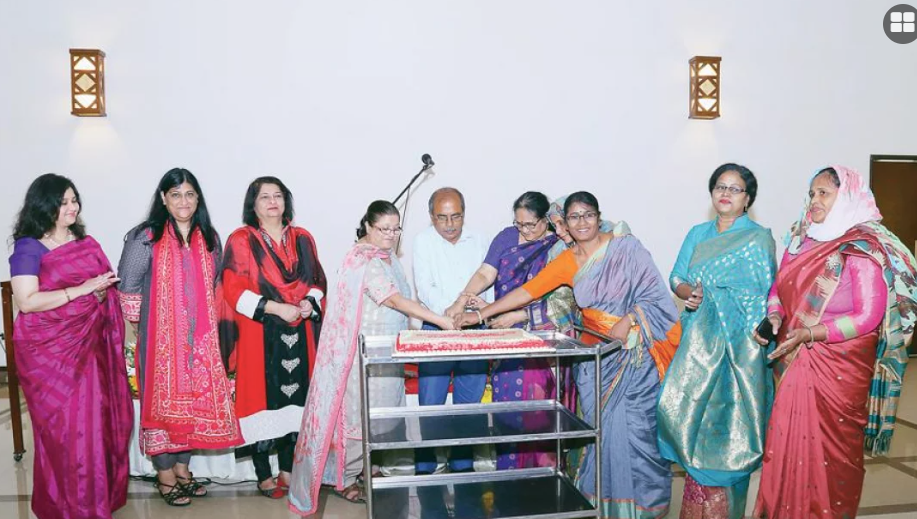
Aga Khan Foundation marks International Nurses Day
https://www.dhakatribune.com/22275
Publish : 09 Jun 2017, 11:11 PMUpdate : 09 Jun 2017, 11:11 PM

Aga Khan Foundation, an agency of the Aga Khan Development Network (AKDN), observed the International Nurses Day 2017 to honour nurses in Bangladesh, recognising their critical contributions to the health sector and wellbeing of citizens. Marking the day, the foundation held a programme in Dhaka recently, where Professor Yasmin Amarsi, the Founding Dean at the School of Nursing and Midwifery at the Aga Khan University, gave the keynote presentation. Dr Amarsi underscored the need of a united voice among nurses to help improve the profession, highlighting the result of developing nursing quality.
In her welcome speech, Dilshad Dossani, Chair of the foundation’s national committee said: “It is fitting indeed that we are here to celebrate and honour a profession that strives at its heart to care for humanity, both in body and in spirit.” Subhash Chandra Sarker, Additional Secretary (Nursing and Midwifery) of Health and Family Welfare Ministry, who attended the event as the chief guest, highlighted the recent efforts of the government to upgrade the nursing profession in the country. He also encouraged nurses to continue working for the betterment of their profession. The event also gave an opportunity to nurses to share their own perspectives about their work and profession in the country. AKDN has been working in the field of nursing, primarily through the Aga Khan University, for nearly forty years, in many countries including in Afghanistan, Egypt, India, Kenya, Pakistan, Tajikistan, Tanzania, and Uganda. This year, the International Nurses Day with the theme “Nurses: A Voice to Lead, Achieving the Sustainable Development Goals” was marked on May 12. There are over 40,000 registered nurses working in the country; around 90% of whom are women.
Discussants stress on corporate social responsibility
Staff Correspondent
Published: 14 May 2018, 23: 09
Share now
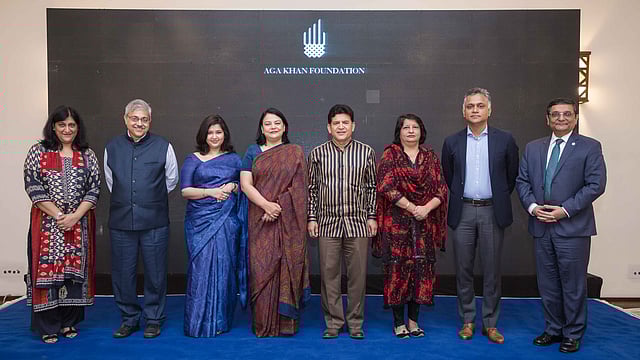
Hossain Zillur Rahman (middle right), Nihad Kabir (middle left), Syed Nasim Manzur (2nd from the right), ApoorvaOza (2nd from the left) and the members of the Aga Khan Foundation (Bangladesh) National Committee.
Businesses can contribute more systematically and sustainably to the social development in Bangladesh through corporate philanthropy and corporate social responsibility, said discussants at a seminar.
Corporate bodies should undertake philanthropy and be socially responsible because it makes good business sense and it allows the corporate bodies to influence the kind of society in which the business will operate, they said at the seminar titled “Doing Well by Doing Good: A Discussion on Business and Philanthropy”.
Aga Khan Foundation (AKF), an agency of the Aga Khan Development Network (AKDN), organised the seminar at the Ismaili Jamatkhana and Centre, in Bashundhara in the capital recently.
The seminar brought together representatives from some of the country’s top business houses.
Speaking at the seminar, prime minister Sheikh Hasina’s international affairs advisor Gowher Rizvi said: “Philanthropy, when properly directed, when it listens to the people whom it is serving, can be very successful.”
Prime minister Sheikh Hasina’s international affairs adviser Gowher Rizvi, was the chief guest at the Aga Khan Foundation event.
Dilshad Dossani, chairperson of the Aga Khan Foundation (Bangladesh)’s National Committee, said: “The notion of indigenous philanthropy and the paradigm shift towards self-reliant development, we believe, has never been more relevant than it is today in the context of Bangladesh.”
The chief executive officer of the Aga Khan Rural Support Program (India), ApoorvaOza, said: “There is an initial tendency among many corporate bodies to do a lot of charity work, what we call transactional work, but the real change comes from transformational work, when we attack the roots of the problem, and that is a slow process for corporate bodies to learn, but it is happening.”
A panel discussion was held, moderated by Power and Participation Research Centre executive chairman Hossain Zillur Rahman.
Among others, Metropolitan Chamber of Commerce and Industries president Nihad Kabir and Apex Footwear Ltd managing director Syed Nasim Manzur were also present on the occasion.
“Corporate bodies have the choice of being token or the choice of being significant. They have the opportunity to shape the agendas of tomorrow,” noted Hossain Zillur.
APPENDIX B: CHARITY WORK
VOLUNTARY/SOCIAL PROGRAMS AND ACTIVITIES
Investing in Forgotten Futures: A Visit to a School for Slum Children (March 4, 2023)
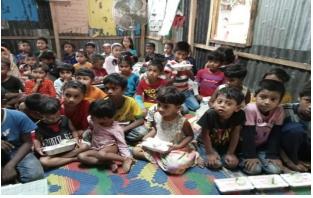
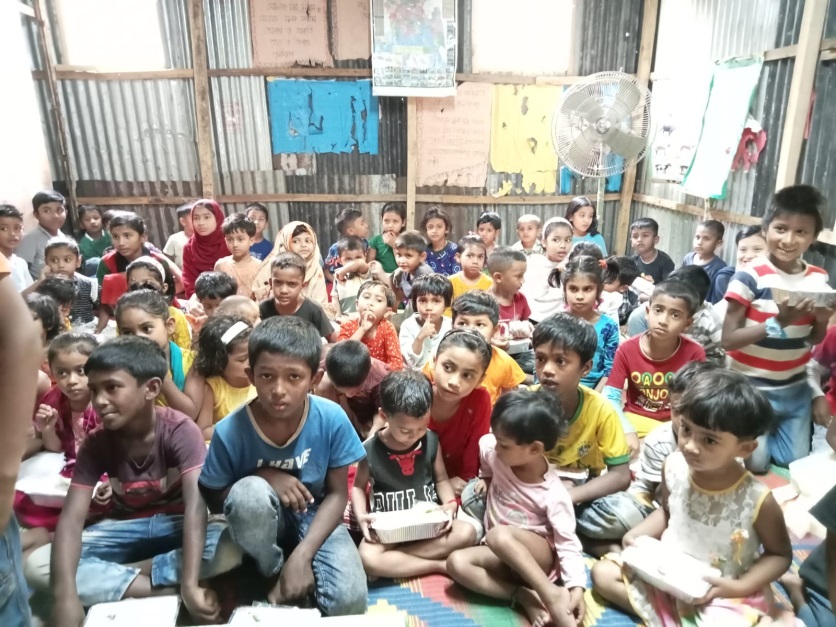
On March 4, 2023, the Events for Development team made a meaningful visit to a school serving some of Dhaka’s most underserved children — a small but resilient institution nestled within a slum community and brought to EFD’s attention through the Bangladesh Girl Guides Association.
The school’s story is one that reflects a broader challenge facing grassroots education in Bangladesh. Established with the support of a government project, the school thrived in its early years, providing a safe and nurturing learning environment for children who had few other options. When that government project came to a close, so did the funding — leaving the school without institutional support and its dedicated teachers and staff to carry on against considerable odds. It is through the tireless efforts of the Bangladesh Girl Guides Association that the school has continued to survive, as the Association works actively to connect it with organizations willing to step in and make a difference.
On the day of the visit, EFD was welcomed by approximately 80 bright-eyed children and 5 committed staff members and teachers. In a simple but deeply meaningful gesture, the team brought chicken biryani for everyone — a beloved treat that the children rarely, if ever, get to enjoy. The joy and excitement on the children’s faces spoke volumes. It was a reminder that sometimes, the smallest acts of kindness carry the greatest emotional weight.
What struck the EFD team most profoundly, however, was not just the children’s delight — it was their remarkable potential. These are sharp, intelligent, and curious young minds who, given the right support, mentorship, and resources, have every capacity to grow into confident and capable contributors to society. Their circumstances do not define their ceiling; access to opportunity does.
EFD developed a framework for regular, structured support. The scope of assistance is guided by available funding, but EFD’s commitment to these children is unwavering. Every child in that classroom deserves a fair chance, and EFD is determined to help make that possible.
Nurturing Roots, Building Futures: A Visit to the Girls’ Orphanage, Mirpur (March 7, 2024)
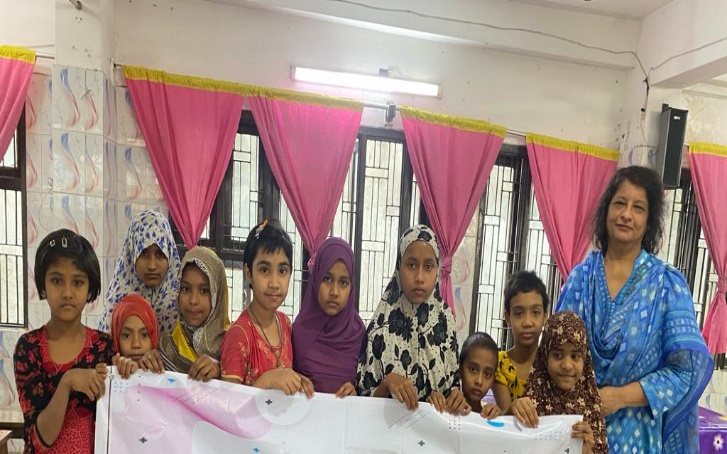
Through the continued partnership with the Bangladesh Girl Guides Association, Events for Development was introduced to a girls’ orphanage in Mirpur — another community of young lives full of promise, quietly waiting for the world to take notice.
The visit was designed to be more than a one-time gesture of goodwill. In keeping with EFD’s commitment to environmental stewardship and climate action, the team organized an educational session and a tree plantation activity on the orphanage grounds, engaging the girls in a hands-on experience that connected them to nature and instilled a sense of responsibility for the environment around them. Each girl was also gifted a money plant pot — a small but symbolic token representing growth, resilience, and the hope of a greener future. It was a moment that blended environmental education with emotional meaning, reminding these young residents that they, too, have a role to play in caring for the world they will inherit.
To bring warmth and celebration to the day, every child received a thoughtfully assembled goody bag filled with their choice of goodies. The smiles, laughter, and sheer delight that filled the room were a powerful testament to how profoundly simple acts of care can uplift a child’s spirit. For many of these girls, such moments of joy are rare — and that is precisely what makes them matter so deeply.
Beyond the visit itself, EFD recognized that lasting impact requires sustained commitment and continued working with them to develop a framework for regular, structured support — encompassing essentials such as books, uniforms, nutritious food, and whatever else may be needed to give these girls the foundation they deserve. Because every child, regardless of circumstance, is entitled to dignity, opportunity, and a future worth looking forward to.
A Brotherhood of Care: Visit to the Boys’ Orphanage (March 2025)
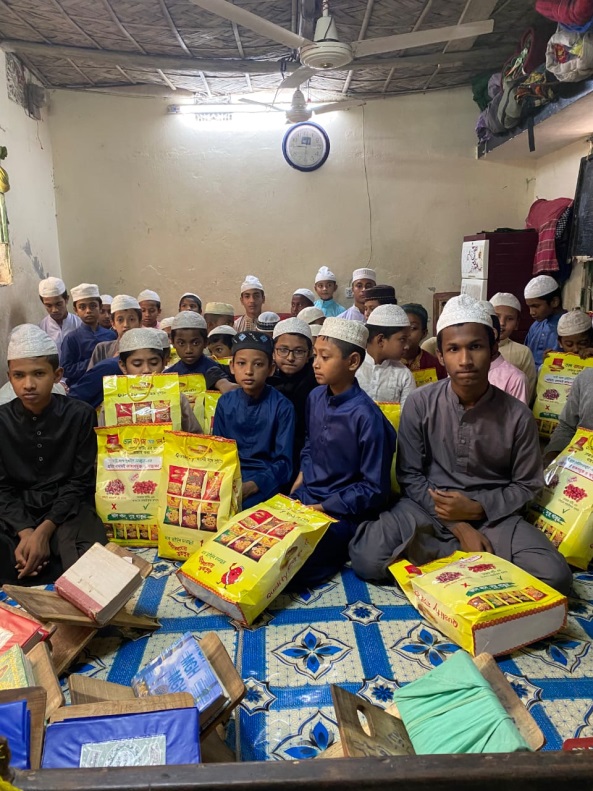
In March 2025, the Events for Development team extended their outreach to a boys’ orphanage, visiting approximately 45 young boys whose resilience and spirit left a lasting impression on all who came. Understanding that joy is as essential as sustenance, the team arrived with generously packed goody bags filled with an assortment of children’s favorites. The energy in the room was immediate and infectious; for a few precious hours, these boys were simply children — laughing, snacking, and basking in the warmth of being cared for.
Yet beneath the celebration lay a deeper reality. These boys carry needs that go far beyond a single visit, and EFD listened carefully. When asked what would make the greatest difference in their lives at that moment, the answer was both simple and deeply moving — Punjabis for Eid. For most children, dressing up for Eid is a given, a cherished tradition woven into the fabric of the festive season. For these boys, it was a wish — one that spoke not just of clothing, but of belonging, of dignity, and of the desire to celebrate like every other child.
Events for Development took that wish to heart to fulfill this request and ensure that these boys step into Eid with their heads held high, dressed with the pride and joy that every child deserves on such a special occasion.
It is in moments like these that EFD’s mission finds its truest expression — not in grand gestures, but in listening closely, responding with empathy, and showing up for those who need it most.
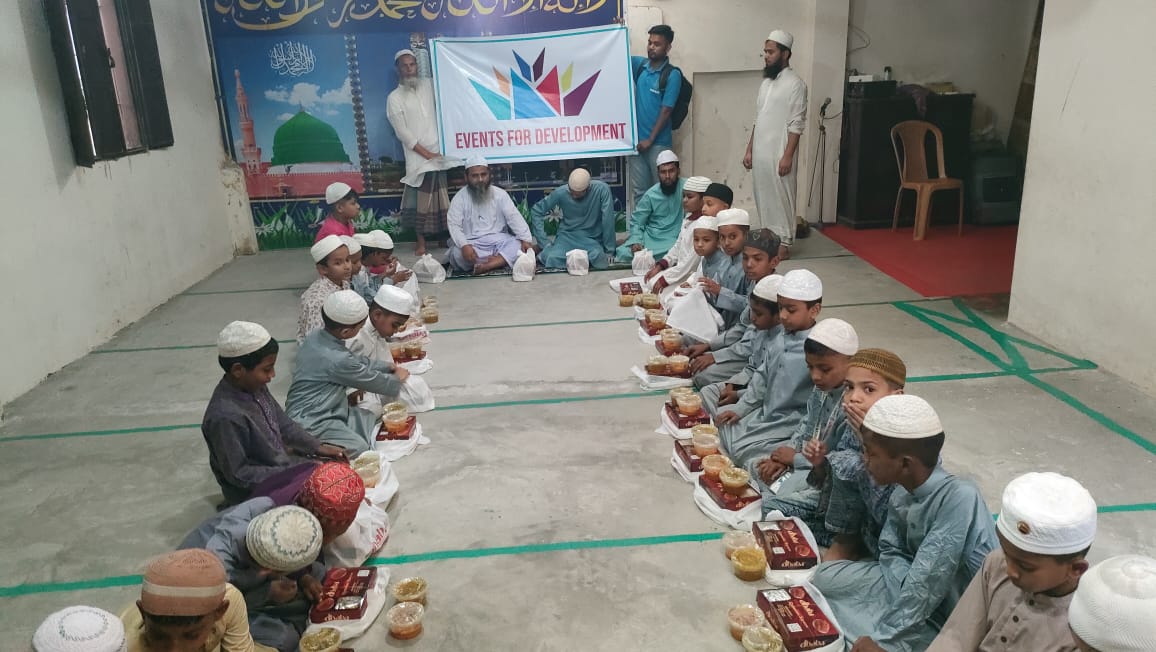
A Table of Compassion: Iftaar and Dinner Distribution Across Schools and Orphanages (March 23–24, 2025)
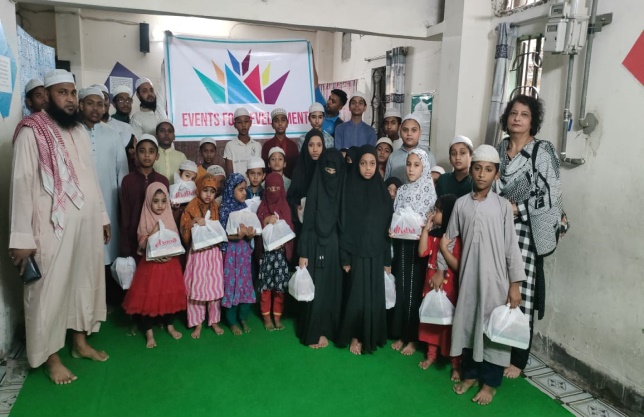
In the blessed spirit of Ramadan — a season defined by reflection, generosity, and the breaking of barriers — the Events for Development embarked on a two-day journey of giving that touched the hearts of over 100 children, teachers, and support staff across a slum children’s school and two orphanages in Dhaka.
On March 23 and 24, 2025, as the day drew to a close and the call to Iftar approached, EFD ensured that no child would break their fast without a meal worthy of the occasion. Carefully curated Iftaar and Dinner boxes, brimming with a rich assortment of dinner items, were sourced from one of Dhaka’s finest restaurants — because these children, who so often go without, deserved nothing less than the very best. Each box was not merely a meal; it was a message — that they are seen, they are valued, and they are not forgotten.
The atmosphere at each stop was one of warmth, gratitude, and pure, unfiltered joy. Children and teachers alike savored every bite, their faces illuminated with happiness that no photograph could fully capture. For many of the children, sharing an Iftaar meal of this quality was an experience unlike any other — a moment of dignity and celebration in the midst of everyday hardship.
This initiative reflects the very essence of what Events for Development stands for: the belief that compassion must be active, that development must be human, and that the most meaningful investments are those made directly into the lives of people who need it most. As Ramadan calls us to give, EFD answered — not with token gestures, but with genuine care and heartfelt commitment.
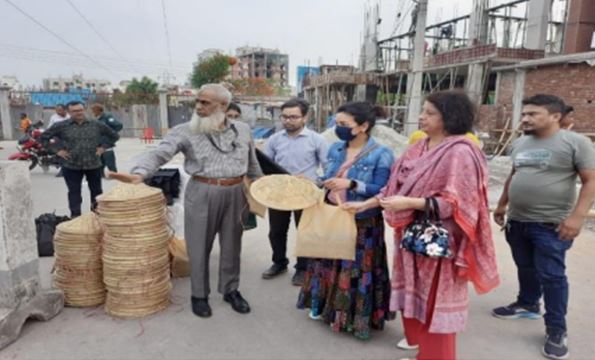
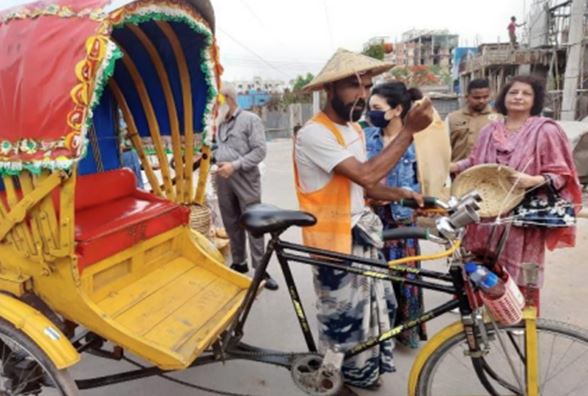
Frontline Climate Relief: Protecting Rickshawpullers from Extreme Weather (May 13, 2023)
In a heartfelt demonstration of grassroots climate action, EFD reached out directly to one of Bangladesh’s most vulnerable and often overlooked communities — the hardworking rickshawpullers. On May 13, 2023, essential weather protection kits comprising hats, raincoats, and polythene covers were distributed to 200 rickshawpullers, equipping them to face the harsh realities of extreme weather conditions that climate change continues to intensify.
Rickshawpullers spend long, grueling hours exposed to the elements — scorching heat, torrential monsoon rains, and unpredictable storms — with little to no protection. This initiative recognized that climate change is not an abstract policy challenge; it is a daily, lived hardship for millions of low-income workers whose livelihoods depend entirely on being outdoors. By placing climate resilience directly in the hands of those who need it most, EFD translated its commitment to environmental action into tangible, human-centered impact.
This activity stands as a powerful example of EFD’s belief that meaningful climate action must be inclusive — reaching the most marginalized communities first.